
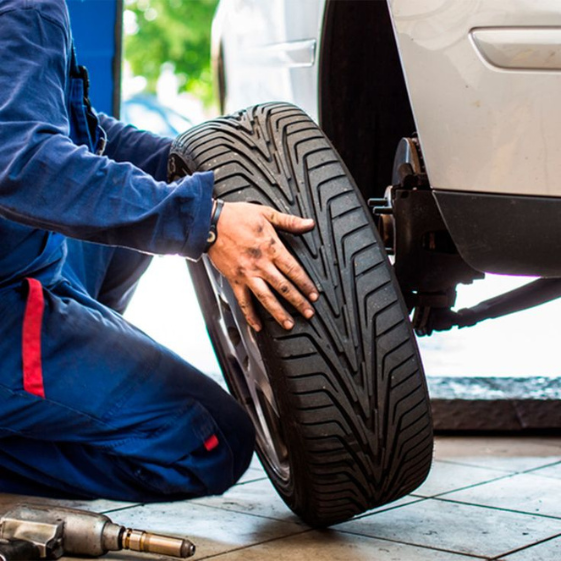
 We will explain Common tyre problems and how to fix them quickly, as well as when to replace the tyres. Tyres are a crucial part of a car, but we often overlook minor issues until they escalate into bigger problems. Understanding small problems, like uneven tread wear or bulging sidewalls, can be crucial for safety.
Uneven tyre wear
Problem
When a tyre wears unevenly, it starts to vibrate, loses steering control, and may indicate improper wheel alignment or low air pressure.
Solution
- Check the air pressure and adjust it to the manufacturer’s recommended setting.
- Have the wheel alignment done by a qualified mechanic.
- Consider rotating the tyres every 10,000 to 15,000 km to ensure a smooth ride.
- Have professionals inspect the suspension and brakes.
- If necessary, replace the tyre. Avoid using a tyre that is older than 5 years.
Puncture and slow leak
Problem
Air may decrease gradually due to small objects, such as screws or sharp items. Even small issues can worsen and damage the tyre. Slow leaks can often go unnoticed for several days or even weeks. Faulty valve stem, such as a cracked, corroded, or loose valve core, often due to age or missing dust caps. Rim damage and hot temperatures can cause a puncture and a slow leak problem, too.
Solution
- Repair a puncture with a plug or patch if the damage is within the tread and not too large.
- A technician can properly fix the puncture from inside, and if necessary, replace the rim.
- For the detection, use a soapy water test u will see the bubble in the leak section.
- If the tyre consistently loses air pressure without a visible puncture, replace the valve core.
Bulging/cracked sidewalls
Problem
Bulging occurs when the inner structural cords, which give the tyre strength, break. This often happens after hitting potholes, curbs, or road debris, especially at high speeds. Air pressure from inside the tyre pushes the outer, unreinforced rubber layer outward, creating a bulge. This can lead to an immediate accident.
Solution
- Replace the tyre immediately instead of trying to repair it.
- Do not drive on a tyre with a bulge or significant cracks.
- Seek help from a professional, as this issue may also be present in other tyres.
- If possible, use a spare tyre and drive carefully to the tyre shop.
Performance indicator
Problem
We often notice that an unbalanced wheel causes damage to the rim or internal tyre, vibration, and shaking. Usually, we neglect these signs for a week or more, which causes suspension components and premature wear to tyres.
Solution
The moment we notice these sign immediately inspect with a professional and repair. For this kind of problem, the solution is that wheel balancing, wheel alignment, and sometimes tyre rotation can fix the problem. If necessary, replace the tyre while fitting new tyres. Check if the rim is bent, as this can cause vibration and shaking.
Excessive road noise
Problem
An air compressor can be the reason for excessive road noise. This is why when the tyre roll air is trapped between the tread blocks and compresses against the sidewalk, creating a droning hum. Constant rumbling that gets louder with speed often indicates a failing wheel bearing rather than the tyres themselves. Uneven tread and tyre specification can also be the reason for the excessive road noise.
Solution
Balance and rotate the tyre every 8,000 to 10,000 km. If planning to buy a tyre in 2026, buy a noise-cancelling tyre or a variable pitch tread pattern that cancels out excessive road noise. We can provide Pirelli and Continental, etc. brands at Non Stop Tyres. Avoid aggressive use of acceleration and hard braking. Regular maintenance, tyre technology, and driving habits can fix the problem. These are common tyre problems, and to fix them, inspect carefully and get a repair from professionals.
Frequently Asked Questions
Q- What are the types of tyre failure?
Ans – Puncture Failure, Blowout (Sudden Tyre Burst), Sidewall Failure, Tread Separation, Overheating Failure, Wear-Related Failure, Age-Related Failure, etc. We recommend that our client inspect the tyre immediately at Non Stop Tyres. If they notice these signs.
Q- What are the Signs & Symptoms of Bad Tyres?
Ans – Uneven wear patterns, cracks, and bulges in the side wall, as well as physical damage like embedded objects, and performance issues such as excessive vibration, strange noise, and frequent air pressure loss, all indicate that you need to inspect the tyre with professionals and, if necessary, replace the tyre.
Q- What is the age limit of tyres?
Ans- According to us, when the tyre age limit is 0-3 years its safe to use, and at the age of 4-5 years, inspect carefully because the rubber starts aging. In 6 years, replace the tyre even if the tread depth is perfectly fine for safety purposes because the rubber is getting damaged.
Q- When to replace tyres?
Ans – When the tread depth is getting low e.g when the tread depth is 1.6mm or less. It’s recommended to replace the tyre when its reach at 2-3 mm for safety purposes. Even in an RTA vehicle inspection, your car will fail if the depth is below the legal limit, which is 1.6mm.
We understand that in a busy schedule we often ignore these common problems, but tyres are an extremely important part in car. Tyres help us to make our journey smooth and beautiful. We hope this blog can help you to understand common tyre-related problems and how to fix them. For professional help, visit Non Stop Tyres.